Friday, August 19, 2011

National Seminar on "Scientific Dating of Ancient Events Before 2000 BC" held on 30th & 31st July, 2011


(1) I-SERVE was established in 2004 under the chairmanship of Dr. K. V. Krishna Murthy and Shri. R. Venkataraman, former President of India, as its Patron-in-chief, with the noble mission of establishing synergy between the scientific wisdom of ancient India and modern scientific inventions. The main objectives of I-SERVE are:

I. To identify, collect and study Vedic and Post Vedic Indian Literature with the object of deciphering scientific theories, techniques and knowledge contained therein which could help in developing nature-friendly and pollution-free technologies particularly in the fields of agriculture, energy, metallurgy and medicine.

II. To carry out research into the authenticity and historicity of ancient events, by making use of modern scientific tools, which could provide common memories to different communities in India for developing a sense of shared pride in our rich heritage.

(2) In pursuit of the 2nd objective, I-SERVE Delhi Chapter undertook research on the Scientific Dating of Ancient Events from Rigveda to Aryabhatiam, which had two parts:

(i) To ascertain astronomical dating of planetary references in ancient Sanskrit manuscripts by making use of planetarium software.

(ii) To correlate such astronomical dates with corroborating archaeological, anthropological, paleobotanical, geological, ecological, oceanographic and remote sensing evidences.

(3) This research project was approved and part funded by Rashtriya Sanskrit Sansthan, MoHRD, Govt. of India. The research team proceeded with the premise that historic events are what actually happened during last thousands of years; their evidences are hidden under land and sea waters. Our knowledge so far is very limited. Reliance was placed on use of some new scientific inventions and tools for undertaking the scientific dating of ancient events through investigation of evidences. These evidences are not only those that lie buried under the land and the sea, but also those that are contained in our ancient books in the shape of planetary references.

(4) The subject was very vast and our research has been very meticulous and thorough. The research team, consisting of Sanskrit scholars, astronomers, archaeologists, anthropologist, geologist and other subject experts, after carrying out research for more than a year, decided to place research outcomes before the scientists/original researchers and the public in respect of the first part i.e. Scientific Dating of Ancient Events Before 2000 BC especially because the results of our research so far were very promising.

(5) The astronomical dates, calculated so far, indicate the development of indigenous civilization in India from the dates even prior to 6000 BC. Astronomical references in Rigveda represent the sky view of dates belonging to the period 8000 BC to 4000 BC and those mentioned in Valmiki Ramayana refer to sky views seen sequentially on dates around 5000 BC. Astronomical dates of some of the planetary references in Mahabharata on planetarium software work out to be around 3000 BC. Many archaeological, anthropological, paleobotanical, geological, ecological, oceanographic and remote sensing evidences have been found which corroborate the astronomically calculated dates giving evidence that Indian civilization could be much older than what is normally believed.

(6) The two days' national seminar on this subject was held on 30th and 31st July, 2011 in the auditorium of IIMC at Aruna Asaf Ali Marg, New JNU Campus, New Delhi. The Seminar was attended by Sanskrit scholars and astronomers, archaeologists and anthropologists, geologists and ecologists, oceanographers and space scientists, bureaucrats and professionals, professors and academicians as well as other persons from the public and media, who were interested in this subject.

(7) A brochure was prepared, designed and printed. It was sent along with the formal invitations. This brochure also acknowledged the support from Rashtriya Sanskrit Sansthan and from Ministry of Earth Sciences.

(8) His Excellency Dr. A.P.J. Abdul Kalam (Former President of India) blessed the occasion with his venerated presence as the chief guest and delivered the inaugural address on 30th July. (The text of this address is also available at www.abdulkalam.com. Hon'ble Justice Sh. Ashok Bhan, Chairman of NCDRC and Sh. J. Sircar, Secretary (Culture) were the guests of Honour. Sh. K. V. Krishnamurthy, Chairman of I-SERVE delivered the welcome address and Mrs. Saroj Bala, Research Project Coordinator gave a brief introduction of the subject of the Seminar. H.E. Dr. A.P.J. Abdul Kalam endorsed the scientific methods of dating of ancient events and emphasized that a mechanism needs to be built to disseminate the knowledge and information generated during the seminar amongst school and college children to generate a shared pride in our rich and ancient most heritage. His speech acted as a big motivating factor and as a morale booster for the research team of I-SERVE. He made many important recommendations, which included:

(i) Launching research on India's Epics with at least 100 Ph.Ds with highly talented historical, geological, astronomical and space scientists to ascertain the veracity of history and dates of events in our epics.

(ii) The scientific dating of our epics has also to be related to Genealogy and with human genome sequences.

(iii) The evolution of human origin put forth by Prof. Tobias should be related to events of Indian epics. After all, every Indian epic deals with human history, their conflicts and their civilization.

(iv) The spoken language period as per Prof. Tobias is around 10000 years old and the birth of Rama based on the 9th tithi of Chaitra month and sky view of planetary configurations at the time of birth dates to 10th January in 5114 BC, that is 7125 years back. We need to establish the relationship between the birth of spoken language and the evolution of Valmiki Ramayana.

The highlight of the program was the release of Seminar Memento, a Wall Clock depicting the sky view on 10th January, 5114 BC at 12:25 PM, which also happened to be the shukla paksha navami of Chaitra month i.e. the date of birth of Lord Ram. This sky view matched exactly the planetary configurations given in Valimiki Ramayan (1/18/8,9).
The Memento was dedicated to the memory of late Sh. Pushkar Bhatnagar, the original investigator. It was released by His Excellency Dr. A.P.J. Abdul Kalam.

(9) Presentations were made by many subject experts who had also remained involved in the research and their research papers have been published in Journals of repute. These presentations were made before the subject experts, who enriched the deliberations with their presence and contribution.

OUTCOMES OF PRESENTATIONS AT THE NATIONAL SEMINAR

(10) Till now we have been told that prior to 1500 BC, India was uncivilized and that the Aryans, who came from Central Asia, pushed the uncivilized inhabitants towards the south who later came to be known as Dravidians. We are also told that these invaders were the ones who set up the first civilized society in North India. Multidisciplinary and purely scientific research has shown that this premise, which was based on linguistic guesswork, is not correct. Scientific evidences from different sources and research studies have revealed that indigenous civilisation has been developing in India for last 10000 years and many of the events mentioned in Vedas and Epics appear to be true and are capable of being scientifically dated.

(11) This National Seminar also proposed to bridge the gap between the information contained in research reports of our eminent modern scientists, available with the Ministry of Science & Technology and Earth Sciences on one hand and the contents of our School and college books on the other. The history has to be looked at as history of events which occurred sequentially on our land during last thousands of years. This only can lead to shared national pride amongst all Indians in our ancient most cultural heritage and scientific achievements of dim distant past.

(12) The premise on which this seminar was organized was that 99% of the research outcomes being presented during the Seminar were not known to 99.9% of Indians. Therefore many questions already agitating their minds and those raised during the deliberations at the seminar were answered on the following lines by the experts/scientists on the basis of the latest scientific research reports:

i. The astronomical dates of planetary references in ancient books calculated by the eminent astronomers by making use of planetarium software, indicate the development of an indigenous civilization in India from dates even prior to 6000 BC. Astronomical references in Rigveda represent the sky view of dates belonging to the period from 8000 BC to 4000 BC and those mentioned in Ramayan refer to sky views seen sequentially on dates around 5000 BC. These dates are exclusive and match sequentially.

ii. The ecological references in ancient books, especially those relating to melting of glaciers and fluctuations in water volumes of ancient rivers, seem to corroborate such astronomical dates. Recent research reports on paleoclimatic changes have revealed that, after the last ice age and in the beginning of the Holocene, the glaciers first melted near the equator i.e. in south India, and civilisation started developing on the Banks of the rivers which started flowing there. When populations multiplied, these river waters became insufficient and some more adventurous people started travelling from south to north. Such northward migration continued or several centuries and finally when these people reached the banks of Himalayan Rivers, they got climatic conditions conducive to long term development of civilisation on the banks of these rivers providing security of water, food and shelter. Thousands of years later, when some of these Himalayan Rivers become non-perennial or started drying up, some of these people moved towards Central Asia and Europe. As per ecologists this ecological cycle has been repeating itself and will get repeated after every ice age.

iii. Remote Sensing pictures taken by ISRO, corroborated by geological reports, have revealed that a mighty river system, referred to in Vedas and Epics as Saraswati, was flowing with full majesty around 6000 BC. The river slowly dried up and almost disappeared around 3000 BC. These conclusions have been supported by sedimentology, hydrogeology and drilling data. These conclusions not only support the astronomical dates of Vedas and Epics but also support such references in ancient books.

iv. The oceanographic reports on fluctuations of water levels in the oceans have revealed the existence of many coastal archaeological sites, either submerged or now found land locked, dated from 7500 BC onwards e.g. Hazira, Dholavira, Juni Kuran, Sur Kotda, Prabhas Patan and Dwarka etc. These supported the historicity and dating of many events mentioned in our Epics i.e. submersion of Dwarka in Mahabharata era and use of Ramsetu as land route in Ramayana era.

v. The paleobotanical research reports have revealed that certain cultivated varieties of plants, trees and herbs, which are mentioned in Vedas and Epics, have existed in India continuously for more than 8000-10000 years. Remains of cultivated rice, wheat and barley have been found belonging to 7000 BC; melon seeds, lemon leaf, pomegranate, coconut and date palm etc relating to 4000 BC; lentils, millets and peas etc from 3000 BC; use of reetha, amla and shikakai for making shampoo since 2500 BC. These plants remained in use continuously indicating that there was not any abrupt end of ancient Indian civilisation as is normally being taught in schools and colleges.

vi. The latest archaeological excavations have revealed large volume of new data which has proved the indigenous origin and development of civilisation in the Indian Subcontinent since 7000 BC. Some examples are: Lahuradeva, Jhusi, Tokwa and Hetapatti in Ganga Valley in the east; Mehrgarh, Kot Diji and Nausharo in Indus valley in the northwest; Lothal and Dholavira in the west. The material testimonies of these excavations have shown gradual cultural developments from the 7th-6th millennium BC in the entire region of Indus-Saraswati-Ganga system for a period of almost eight thousand years. Thus archaeology is also supporting the astronomical, ecological and anthropological conclusions that Aryans were originals of India, they have been creating and nurturing a continuously developing civilisation for last 10000 years and dispersal probably happened the other way round.

vii. The anthropological research reports have established that DNA dating for Paleolithic continuity starts from 60000 BC. The Genome studies during the Holocene have revealed that the genetic profile of humans settled in north, south, east and west of India is the same and has remained the same for the last more than 11000 years. It is also significant to note that the inhabitants of the Harappan civilisation were not a mysterious people of unknown biological origins, or migrants from western/central Asia, but they were the indigenous people identified with the pre/early Harappan cultures of northwestern region of the Indian subcontinent. Therefore, contrary to the popular belief, the Dravidians as well as north Indians have common ancestors and both are originals of India, have common genetic profile and thus had common ancestors.

(13) Shri Pawan Kumar Bansal, Hon'ble Minister, Ministry of Parliamentary Affairs and Ministry of Water Resources, delivered the valedictory address on 31st July, 2011. Hon'ble Justice Sh. Ashok Bhan, Shri Manbir Singh, Secretary, Ministry of External Affairs (ER) and Smt. Poonam Kishore Saxena, Member, Central Board of Direct Taxes, graced the occasion as Guests of Honour and enriched the standard of the Seminar with their informed and encouraging addresses. They emphasized that all these multidisciplinary scientific research reports, presented during the Seminar, prima facie establish that indigenous civilization has been developing in India for last 10000 years and that all Indians share their genetic profile, therefore, it is time to move away from the linguistic theory of Aryan invasion and raise our heads with pride as nurturers of the oldest civilization in the world.

(14) Sh. K.V. Krishna Muthy, Chaiman I-SERVE delivered the welcome Address and Smt. Saroj Bala presented the Summation of the proceedings. Sh. Y.K. Gaiha, IRS (Member of BIFR) briefed the participants about the public welfare and business opportunity created by this kind of research and particularly by this National Seminar:

(i) The presentations during the Seminar have the potential of uniting all Indians by bridging the North-South divide which is based on only linguistic guesswork, having no scientific basis. These also raise their self esteem.

(ii) Focus on harnessing drinkable water underground trapped below dry paleochannels of ancient rivers like Saraswati and Drishadwati can help resolve some of the water-scarcity problems in selected areas of water scarcity.

(iii) Seminar creates huge potential for promoting tourism e.g. if a transparent tube and an underwater museum are created at the site of submerged Dwarka city, the entire cost can presumably be recovered during first one year and tourism in India will enter the next generation facilities.

(15) Hon'ble Minister Sh. Pawan Kumar Bansal appreciated the multidisciplinary and coordinated research effort to determine the dates and historicity of ancient events. He particularly desired that I-SERVE may provide more detailed information which can help the Govt. in augmenting the water availability in areas suffering from water scarcity e.g. Rajasthan. The themes which help create national unity and promote tourism were especially endorsed by the Hon'ble Minister. The Seminar concluded with a vote of thanks by Smt. Vinita Surie.

Saroj Bala
Director, I-SERVE Delhi Chapter
C-II/ 107, Satya Marg, Chanakyapuri,
New Delhi - 110021 (9958008787 / sarojbala44@yahoo.co.in)

Saturday, July 2, 2011

Historicity of the Era of Lord Rama


We,.Indians, are the products of one of the oldest civilisations.. We need to be really proud of.our ancient history and cultural heritage. However, during the British Rule, we developed an.inferiority complex, which adversely affected our quest to unearth facts relating to our glorious past..But our young and educated men and women, being born and brought up in independent.India, are capable of unearthing the true facts and are confident enough to evaluate these objectively.
Shri Rama being most basic to Indian ‘ethos’,.it is necessary to know who is Shri Rama? Was he really born?.If yes, when and where?.As is believed by crores of people did he really put his feet on the territory of India from North to South, reducing the sufferings of mankind and.ensuring victory of good over evil?.Let us have a look at historical facts.
The story of Shri Ramas life was first narrated by Maharishi Valmiki in the Ramayan which was written after Shri Rama was crowned as the king of Ayodhya. Maharishi Valmiki was a great astronomer as he has made sequential astronomical references on.important.dates.related to.the life of Shri.Rama indicating the location.of.planets vis-a-vis.zodiac.constellations and.the.other.visible stars (nakshatras).   Needless to.add.that.similar position.of.planets and.nakshatras vis-a-vis zodiac constellations is not repeated in thousands of years. By.entering the precise details of the planetary configuration of the important events in the life of. Shri.Rama.as.given in.the Valmikis.Ramayan.in.the.software.named Planetarium Gold corresponding exact dates of these events according to English calendar can be.known.
Sh. Pushkar Bhatnagar of Indian Revenue Service had acquired from USA the software.named Planetarium Gold (of Fogware Publishing) which is used to predict the solar/lunar.eclipses and distance and location of other planets from earth by the scientists and astronomers. He entered the relevant details about the planetary positions vis-a-vis.zodiac constellations.narrated by Maharishi Valmiki and obtained very interesting and convincing results, which almost determine the important dates starting from the birth of Shri Rama to the date of his coming back to Ayodhya after 14 years of exile. Sh..Pushkar Bhatnagar has given very authentic and convincing details of these dates in his book titled ‘Dating the Era of Lord Rama’ published by Rupa.& Co., some extracts from which are being summarised in.the succeeding paras.

Date.of Birth of Lord Rama
Maharishi Valmiki has.recorded.in.Bal.Kaand.Sarga.18.and.Shloka 8.&.9 (1/18/8, 9) that Shri Rama was born on 9th tithi of Chaitra month during day time when the position of different planets vis-a-vis zodiac constellations and nakshatras (visible stars) was as under:
(i) Sun in Aries
(ii) Saturn in Libra 
(iii) Jupiter in Cancer
(iv) Venus in Pisces 
(v) Mars in Capricorn 
(vi) Lunar month of Chaitra 
(vii) Ninth day after no moon
(viii) Lagna as Cancer (Cancer was rising in the east) 
(ix) Moon on the Punar vasu (Gemini constellation and Pollux star)

This data was fed into the Planetarium Gold software, the results indicated that this was exactly the location of planets/stars vis-a-vis zodiac constellations on the 10th.of January noon.time in the year 5114.BC.if viewed from latitude/ longitude of Ayodhya (25N 81E)..Thus Shri Rama.was born on 10th January in 5114 BC.(i.e. 7117 years back).. By making use of software to convert solar calendar into lunar calendar, it was found that this date also happened to be the 9th day of Shukla Paksha in Chaitra’.month and the time was around 12 to 1 noontime. This is exactly the time and date when Ram Navmi is celebrated all over India till date. The relevant sky view generated by Planetarium Software is enclosed.

Date of Exile of Shri Rama
In Valmikis Ramayan it is mentioned in Ayodhya Kaand (2/4/18).that Dashratha wanted to make Shri Rama the king because Sun, Mars and Rahu had surrounded his nakshatra and.normally under such planetary configuration the king dies or becomes a victim of conspiracies.. Zodiac sign of king Dashratha was Pisces and his nakshatra was Rewati..This planetary configuration was prevailing on the 5th of January 5089 BC.and it was on this day that Shri Rama had to leave Ayodhya for 14 years.. Thus he was 25 years old at that time (5114-5089).and there are several shlokas in Valmikis Ramayan which indicate that Shri Rama was 25 years old when he left Ayodhya for his 14 years of exile.

Planetary position on 10th January, 5114 BC 
the date on which Rama was born


In Valmikis Ramayan it is mentioned in Ayodhya Kaand (2/4/18).that Dashratha wanted to make Shri Rama the king because Sun, Mars and Rahu had surrounded his nakshatra and.normally under such planetary configuration the king dies or becomes a victim of conspiracies.. Zodiac sign of king Dashratha was Pisces and his nakshatra was Rewati..This planetary configuration was prevailing on the 5th of January 5089 BC.and it was on this day that Shri Rama had to leave Ayodhya for 14 years.. Thus he was 25 years old at that time (5114-5089).and there are several shlokas in Valmikis Ramayan which indicate that Shri Rama was 25 years old when he left Ayodhya for his 14 years of exile.

Sola
r Eclipse during War with Khar-Dushan
Valmikis Ramayan refers to the solar eclipse at the time of war with Khar-Dushan in later half of 13th year of Shri Ramas living in forests. Valmiki has also mentioned that it was Amavasya day and planet Mars was in the middle. When this data was entered, the computer software indicated that.there was a solar eclipse on 7th October,5077 BC (Amavasya day) which could be seen from Panchvati (20N.73E) On that date planetary configuration was the same as has been described by Valmiki, i.e.,.Mars was in the middle, on one side was Venus and Mercury and on the other side.were Sun and Saturn.


Planetary position on 7th October, 5077 BC (Amavasya)
the day of Solar Eclipse, when Lord Rama fought the battle with Khar.
 
Other Important Dates
Only six of the twelve constellations remain above the horizon at the same time. Valmikis Ramayan contains graphic and poetic details of eight constellations during Hanumans return journey from Sri Lanka to Sunaabh Hill in the middle of the sea which apparently took about four and a half hours from 6:30 a.m. to 11 a.m. All these details of planets and nakshtras with.reference to eight constellations described in Sarga 57(1,2,3) of chapter 5 tally exactly with the sky view generated by the software for the morning of 14th..September 5076 BC.
Planetary.position on 14th September, 5076 BC at 6.30 a.m. 
the date and time of Hanumans.return from Lanka.


The date and time of Hanumans.return from Lanka 14th September, 5076 BC.
This slide shows the time when Hanuman.reached the middle of the
sea
to rest on
a small hill.


On the basis of planetary configurations described in various other chapters of Valmikis.Ramayan, the date on which Ravana was killed works out to be 4th December 5076 BC.and Shri Rama completed 14 years of exile on 2nd January,
5075 BC and that day was also Navami of Shukla Paksha in Chaitra month. Thus
Shri Rama had come back to Ayodhya when he was 39 years old (5114.– 5075).


Such sequential matching of important dates in the life of Lord Rama narrated
in.Valmikis Ramayan with astronomical dating done through planetary configurations cannot be a mere coincidence. It speaks volumes about the historicity of the era of.Lord Rama!

Sequential Details of Places.Visited.by Shri.Rama.during 14 Years of Exile
Many researchers, including a colleague Dr. Ram Avtar, have researched on places visited by Shri.Rama during 14 years of exile. They sequentially moved to the places stated as visited by Shri.Rama in the Valmikis Ramayan. Starting from Ayodhya, they went right upto Rameshwaram. They found 195 places which still have the memorials connected to the events relating to the life of Shri Rama and Sita. The locals believe that Shri Rama had actually visited these places. Ayodhya Kand, Aranya Kand, Kishkindha Kand and Sunder Kand (chapters 2, 3, 4 & 5) give.sequential and graphic details of these places which mostly included Rishi ashrams located.along.several river banks. These.details can be divided into 5 phases.

1st Phase Gangetic Belt
They went.to Tamsa.Nadi Tal.(Mandah).–.20.km from Ayodhya,.thereafter crossed Gomti.river (Point.no..2.to.7.of the given map). Then.they reached Ganges and entered.Shringverpur (Singraur) which was kingdom of Nishadraj Guh and is famous for Kewat.prasang (20.km from Allahabad).
After crossing Yamuna near Sangam they reached Chitrakoot on UP and MP borders - memorials include Valmiki Ashram, Mandavya Ashram, Bharat Koop etc. still exist.         After Bharat.Milap.they left Chitrakoot and.went.to Atri Ashram located in Satana in MP.

2nd Phase in Dandak Van
Along with Laxman and Sita, Shri Rama extensively travelled through this land of rivulets and.water bodies and dense forests around MP.and Chhatisgarh. They.roamed around.in.Dandak.Aranya area and.visited.Sharbhang and Sutikshan Muni ashrams in Satna (Point no. 36-41.of the given map). Thereafter,they visited several Rishi ashrams in MP.and Chattisgarh areas, along Narmada and Mahanadi.rivers for 10.years, and.then came back to.Sutikshan ashram. Several memorials in Panna, Raipur, Bastar and Jagdalpur still exist.which include Mandavya ashram, Shringi ashram, Ram Laxman Mandir etc.
After crossing many rivers, lakes, hills and forests they went to Agastya ashram in Nasik.. As.per Valmiki, weapons made in Agnishala were given to Shri Rama by Agastya Muni in this.ashram.

3rd Phase along Godavari
Shri Rama, Laxman and Sita travelled along Godavari..From Agastya ashram they went to stay in Panchvati a place with 5 Vata trees located on banks of Godavari in Nasik (Point no. 116 of the given map). This place is famous for Sharoopnakha episode and war with Khar and Dushan.
There are memorials at the place where Mareech was stated as killed; these include Mrigvyadheshwar and Baneshwar. Infact, Nasik area is full of memorials, e.g.,.Sita Sarovar, Ram.Kund and Triambakeshwar and Janasthan etc.
After this incident,.Sita.was abducted by Ravana, who also killed Jatayu—memorial Sarvatiratha.in Taked Village, 56 km from Nasik, is still preserved.

4th Phase along Tungbhadra and.Kaveri
Shri Rama and Laxman extensively travelled through these areas in search of Sita. After.meeting Jatayu and Kabandh they moved towards south to reach Rishyamook Parbat.  On way they visited Shabari ashram in Pampasarovar area which is now known as Sureban in Belgaon and is still famous for Ber trees. (Point no. 146 and 147 of the given.map.)
After crossing forests of Sandalwood,.many gardens and water bodies,.they went towards Rishyamook. Here they met Hanuman and Sugreev, and were shown Sita’s.ornaments. Shri Rama.killed Bali in this area.
Rishyamook and Kishkindha are located in Hampi, Distt. Ballari of Karnataka.

5th Phase on the Banks of the Sea
Rama with sena marched towards the sea. After crossing Malay Parbat, Chandan
forests, many rivers and ponds they went along Kaveri River. Details of travel narrated in Valmiki’s Ramayan tally with the existing memorials.

Places visited by Lord Rama during Exile (shown in red spots)

 
Ram-sena first camped in Koddikarai but later moved to Rameshwaram for construction of bridge and there are many memorials to commemorate this event in Chhedukarai. After.surveying the sea area the place was found unsuitable for constructing.the.bridge.Therefore,.Shri.Rama.shifted.the.entire.army.to Rameshwaram. After surveying the place for three days, suitable area was identified and the bridge was constructed under the supervision of great.shilpakar Nal. In Rameshwaram, particularly from Dhanushkoti, the boatmen still take visitors in glass boats to show remains of Ramas bridge, but it is considered fashionable to call it Adams bridge instead of calling it by its historical name i.e. Rama’s bridge. Sri.Lankan government wants to construct a land route over this submerged bridge (Pamban to Mannar) whereas.Government of India wants to blast it for shipping i.e. Sethusamndaram project. Shri Jaisurya, Energy Minister of Sri Lanka had proposed construction of land route between India and Sri.Lanka on this submerged Rama Sethu.


Ancestors of Shri.Rama
Indian history has recorded that Shri Rama belonged to Surya Vansh and he was the 64th ruler of this dynasty. Most of the names and other relevant particulars of previous 63.kings are listed in Ayodhya Ka Itihas’ written about eighty years back by Rai Bahadur Sita Ram. In fact most of the names of these ancestors of Lord Rama have been listed in Valmiki Ramayan.itself as narrated by Vashistha Muni to Raja Janak (1/70.& 71)..Professor Subhash Kak of Lousiana University (USA),.in his book “The.Astronomical Code.of the Rigveda”.has also.listed 63 ancestors of Shri Rama who ruled over Ayodhya. The ancestors of Shri Rama have been.traced out as under:
Shri Rama, s/o King Dashratha, s/o King Aja, s/o King Raghu, s/o. Dirghabahu, s/o King Dilipa-II, s/o. King Visvasaha.and so on) ............... (all listed) ............... King Sagar (40th.Ruler) ............... Satyavadi Harish Chandra (33rd.King) ............... .
Professor Subhash.Kak.has also traced.out.29.descendants of Shri.Rama starting with.his son Kusa f/o Atithi, f/o Nisadha, f/o Nala ............... (all listed)
............... 94th Ruler of Ayodhya being Brihatksaya.
 

Ancestors & descendants of Shri.Rama.who.was.the 64th Ruler.of Surya.Vansh
1. Manu
33..Hariscandra
65..Kusa
2. Iksvaku
34..Rohita
66..Atithi
3. Vikuksi-Sasada
35..Harita, Cancu
67..Nisadha
4. Kakutstha
36..Vijaya
68..Nala
5. Anenas
37..Ruruka
69..Nabhas
6. Prithu
38..Vrka
70..Pundarika
7. Vistarasva
39..Bahu (Asita)
71..Ksemadhanvan
8. Ardra
40..Sagara
72..Devanika
9. Yuvanasva (I)
41..Asamanjas
73..Ahinagu
10..Sravasta
42..Amsumant
74..Paripatra
11..Brihadasva
43..Dilipa (I)
75..Bala
12..Kuvalasva
44..Bhagiratha
76..Uktha
13..Drdhasva
45..Sruta
77..Vajranabha
14..Pramoda
46..Nabhaga
78..Sankhan
15..Haryasva (I)
47..Amabarisa
79..Vyusitasva
16..Nikumba
48..Sindhudvipa
80..Visvasaha (II)
17..Samhatasva
49..Ayutayus
81..Hiranyabha
18..Akrsasva
50..Rtuparna
82..Pusya
19..Prasenajit
51..Sarvakama
83..Dhruvasandhi
20..Yuvanasva (II)
52..Sudasa
84..Sudarsana
21..Mandhatr
53..Mitrasaha
85..Agnivarna
22..Purukutsa
54..Asmaka
86..Sighra
23..Trasadsyu
55..Mulaka
87..Maru
24..Sambhuta
56..Sataratha
88..Prasusruta
25..Anaranya
57..Aidavida
89..Susandhi
26..Trasadsva
58..Visvasaha (I)
90..Amarsa
27..Haryasva (II)
59..Dilipa (II)
91..Mahashwat
28..Vasumata
60..Dirghabahu
92..Visrutavant
29..Tridhanvan
61..Raghu
93..Brihadbala
30..Trayyaruna
62..Aja
94..Brihatksaya
31..Trishanku
63..Dasaratha

32..Satyavrata
64..Rama

Satellite Images of Rama’s Bridge
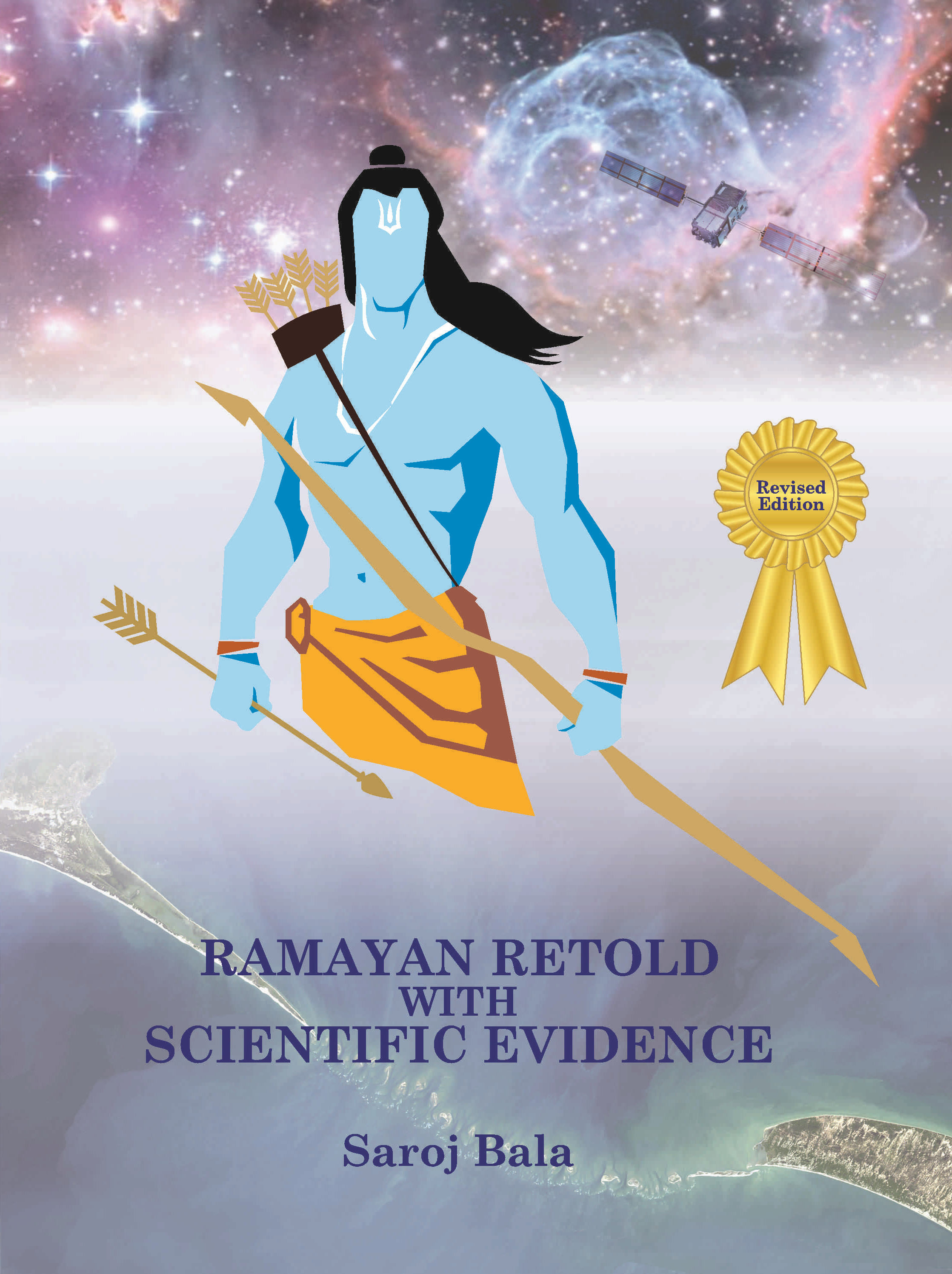
In Valmikis Ramayana, it is mentioned that Shri Ramas army constructed a bridge over the.sea between Rameshwaram and Sri Lanka. After crossing this bridge Shri Ramas army had defeated Ravana and liberated Sita from his captivity. Recently NASA had put pictures on internet.of a bridge, the ruins of which are lying submerged in Palk Strait between Rameswaram (Dhanushkoti) and Mannar (Thalaimannar). The bridge is composed of a series of islands, rocks, and shoals and it is stated to be 30 kilometres long. It is found exactly at the location narrated in Valmikis Ramayan! See NASA picture of this Bridge.


Picture of submerged bridge between Rameshwaram & Sri Lanka
 
In Yuudh Kand,.sarg 22.(shlokas 45-73).Valmiki has narrated in detail that originally Shri Rama’s army camped in Kodikarai but found that place unsuitable for constructing the bridge. Therefore, the entire army was shifted to Rameswaram. Research was carried out by Shri Rama.for three days to.find out a suitable location in the sea for constructing the land route so that.the army could cross over to Sri Lanka. Finally, the suitable location was identified. Shri Nal, a famous shilpakar, who had the expertise similar to that of Vishwakarma in constructing the bridges, was requested to construct the bridge (6/22/45).
After carrying out.the.survey,.Nal.declared that.a.bridge can.indeed.be constructed at the identified location. The armymen of Shri Rama utilized various tools and implements for uprooting trees like Taar, coconut, mango, ashoka, bakul etc., and with the help of various yantras transported these trees, stones, and rocks to the seashore. Shilpakar Nal directed the armymen to.stand with long ropes/ chains on either side and filled the space in between with creepers, trees, stones and rocks and bound them together. The construction of Ramsethu was completed.

 See the Boundaries.looking like ropes & the fillings in between
in five days by connecting the existing land route consisting of islands, rocks and
shoals. See some latest pictures which apparently corroborate such descriptions!

Use of Ramsethu as Land.Route.between.India.and Sri.Lanka
This bridge was being used as land route between India and Sri Lanka for thousands of years,.though sometimes part of it was submerged under the seawater. The website.Google.Earth.contains.interesting as.well as.authentic pictures.of submerged Ramsethu whereas the website of Chicago University http://dsal.uchicago.edu/reference/schwartzberg/.displays.most.authentic historical atlas of South Asia and has placed pictures of Ramsethu for the period starting from.vedic.era.and.5th..century BC.to.19th. century AD.along with nomenclature of Ramsethu prevailing at.the relevant times!

Maps from Historical Atlas.of South.Asia.by J.E. Schwartzberg
In the ‘Historical Atlas of South.Asia’ prepared by Joseph.E. Schwartzberg
(1978) and placed on its website by the university of Chicago, there are more than
20 maps giving historical as well as geographical evidence about the existence of this.Ramsethu and its use as land route between India and Sri Lanka during last more than 2500 years. In some of the maps it is shown as a complete bridge used as land route and in some others a part of it is.shown as submerged.
Route followed by Sri Rama for travelling from Ayodhya to Sri Lanka has been shown and.picture of this bridge has clearly been included in the given map on the next page (top).

During the time of Mauryan empire (321–181.BC),.exchange of embassies between King.Ashoka of India and Tissa of Sri Lanka and visit of Asoka’s son Mahindra.are shown.as.undertaken by.partly using land route between Koti (Dhanushkoti) and Tambapanni (also known as Mahatirtha). In an Ajanta painting the scene of landing of King Vijay in Ceylon in.about 3rd..century BC.has been depicted along with elephants, horses and foot soldiers which obviously was possible only.if.land.route.was.used.for.travelling from.Rameswaram.to.Sri.Lanka.


During the Satavahan-Sak-Kushan Age (1–300 AD).Schwartzberg has shown
this Ramsethu being used as land route between India and Sri Lanka and has referred to it.as Rameswaram Koti.

As per this atlas,during the age of Gurjara- Pratiharas, Palas   and Rashtrakutas (700.– 975 AD), the region across the Ramsethu constituted the limits of the regions under the control of Rashtrakuta Kings..In fact, entire Sri Lanka has been shown as part  of kingdom of Rashtrakutas and Ramsethu has been shown as the land connection connecting         the entire kingdom.

Maps prepared by Netherlands, France and UK
According to Hunters Imperial Gazetteer, XI.22.(translated by A.M..Ferguson) the ancient.records preserved in the Rameswaram temple mention that a violent storm in 1480.AD.breached.this bridge and subsequent storms rendered the breach permanent..This fact is corroborated by the two maps drawn in 16th. and
17th..centuries by Netherlands and by a French map drawn in 18th..century.
From 16th. century onwards there are some references to two narrow channels, known as Pamban and Mannar through each of which only very small ships could make their way and that too when the sea was high. Reference to this has also been made by Dutch Governor of Ceylon in.1663.
James Rennell (1742–1830.A.D.) was the first Surveyor General of the East India Company.and is also known as Father of Indian Geography.     A map of Hindustan got prepared by him with the help of Sir Joseph in 1788 has named this bridge as the.RAMAs.BRIDGE and the same is available in Saraswati Mahal
Library, Tanjavur.. However in the later 1804 A.D. version of the map, the name
RAMA BRIDGE has been replaced with the name ADAMS BRIDGE!.Hence the RAMA BRIDGE becomes the ADAMS.BRIDGE and the psychology behind the same needs no.explanation!

Geological.and Oceanography Reports
According to Geological Survey of India report named ‘Project Rameshwaram’, this bridge was capable of being used as land route between India and Sri Lanka
7,000.to 10,000.years back. As per the report of Department of Earth Sciences the existence of.Mesolithic and Microlithic tools and of human fossils on both sides of Rama Sethu indicated.existence of man-made structures.
As per estimate made by the inter-government panel on climate change (NASA, Global Change.Master Directory) the rise in the sea level during the last 7000 years has been about 2.8.metres which roughly corresponds to 9.3.feet.’ The remains of Rama.Sethu.are.found.submerged nearly.at.a depth.of 9-10 feet. Thus, obviously.this.bridge.was.capable.of.being.used.as land.route
7000 years.back.

All attempts to create shipping route by completing the Sethu Samudram project have so far failed. On January 23, 2007, the Asian Age reported.that the DCI dredger imported from Holland had broken into two and sunk into the sea when it began work on the Rama Sethu. The DCI crane that went to pick up the dredger pieces also broke and sank!

The Essence
From Kashmir to Kanyakumari and from Bengal to Gujarat, everywhere people believe in the.reality of Shri Ramas existence, particularly in the tribal areas of Himachal Pradesh, Rajasthan, Madhya Pradesh, Chhattisgarh, Karnataka and the North East.. Most.of the festivals celebrated in these tribal areas revolve around the events in the life of Shri Rama and Shri Krishna.
The events and places related to the life of Shri Rama and Sita are true cultural and social heritage of every Indian irrespective of caste and creed and therefore it is common heritage.. After.all, Shri Rama belonged to the period when Prophet Mohammed or Jesus Christ were not.born and Muslim or Christian faiths were unknown to the world. India was also known as Bharat (means—land of knowledge) and Aryavarta (where Aryans live).

During Rama Rajya, the evils of caste system based on birth were non-existent. In fact, Maharishi Valmiki is stated to be of Shudra class (Scheduled Caste) still Sita lived with him as his adopted daughter after she was banished from Ayodhya and Shri Ramas children Luv and Kusha grew in his ashram as his disciples.

We need to feel proud of the fact that Maharishi Valmiki was.perhaps the first great astronomer and that his study of planetary configurations has stood the test of times. Even the latest computer softwares have corroborated his astronomical calculations, which prove that he did not commit any error.. Shabari is stated to be belonging to.Bheel tribe and the.army of Shri Rama, which succeeded in defeating Ravana was also formed by various tribals from Central and South India. The facts, events and all other details relating to the life of Shri.Rama are the common heritage of all the Indians.
The scientific details narrated about to indicate that Shri Rama was actually born 7000 years back. Hence, discovering the details relating to Shri Ramas life would be.lot more.difficult as.destruction caused by.floods, earthquakes and invasions etc..would be far greater..But should that stop our quest for learning more and more about our cultural heritage?
As Indians, let us all take pride in the fact that Indian civilisation is the most ancient civilisation surviving on planet earth and it is certainly more than 10,000 years old. Therefore, let us reject the story of Aryan invasion of India in 1500 B.C. as mere linguistic guess work or as a motivated implantation. In fact Max Mueller, who was the creator of this theory, had himself rejected this theory. Let us admit that during British Rule, we were educated in the schools.based on Macaulay school of thinking which believed that every Indian was inferior and that.entire
‘Indian literature was not worth even one book rack in England’. If there were similarities in certain features of Indian people and people from Central Europe, then automatic inference drawn was that the Aryans coming from Europe invaded India and settled here. No one dared of thinking in any other way. Therefore, there is urgency for the historians and all other intellectuals.to stop reducing Indian history to myth. There is need to gather, dig out, search, unearth and analyse all the evidences, which would throw more light on ancient Indian civilisation and culture.
It is saddening that even after 60 years of independence, the Government of India has not.constituted a multidisciplinary team consisting of archaeologists, divers, geologists, ecologists and oceanographers to carry out the research around Ram Sethu area..After all when such a team was constituted, the submerged city of Dwarka was found 1.5 kilometres away from the existing Dwarka.

Therefore, instead of certifying.the non-existence of Ramsethu without.any credible research, the need is to carry.out scientific research..Not only this,
with the development of new scientific methods, the old history written on basis of linguistics will have to be discarded..There is a need to constitute a multidisciplinary team in order to carry out research.pertaining to most ancient period and this team should consist of Sanskrit Pandits, Astronomers, Archaeologists, Geologists and Space Scientists..This team should be asked to.carry out and correlate research activities in order to rewrite the history after verifying the authenticity and dating of most ancient events of Indian history.
There is need for the print and the electronic media to take note of these facts and create.atmosphere which would motivate our young and educated youth to carry out research and.unearth true facts about ancient Indian civilisation and wisdom and would also encourage them to put across the results of their research before the people fearlessly and with a sense of pride!

BIBLIOGRAPHY
1. “Srimadvalmeekiya Ramayana. Published by Geeta Press, Gorakhpur.
2. “Dating.the Era.of.Lord.Rama”.by.Pushkar Bhatnagar, Published by.Rupa.& Company.
3. “The.Astronomical code of the Rigveda by Professor Subhash Kak of Lousiana
University (USA),.Published by Munshiram Manoharlal Publishers Pvt. Ltd.
4. Ayodhya Ka Itihas by Rai Bahadur Sita Ram (1932),.Published by Arya Book
Depot,.Karol Bagh, New Delhi.
5. ‘Shri Rama Van Gaman Sthal” by Dr. Ram Avtar, Published by Shri Rama Sanskritik
Shodh Sansthan Trust,.New Delhi.
6. Rama Sethu, Published by Rameswaram Rama Sethu Protection Movement, Chennai.
7. Historical Atlas of South Asia by Joseph E. Schwartzberg.